Civic & philosophical meditation
On the Order That Was Given
A Meditation on Knowledge, Obedience, and the Law We Must Not Abandon
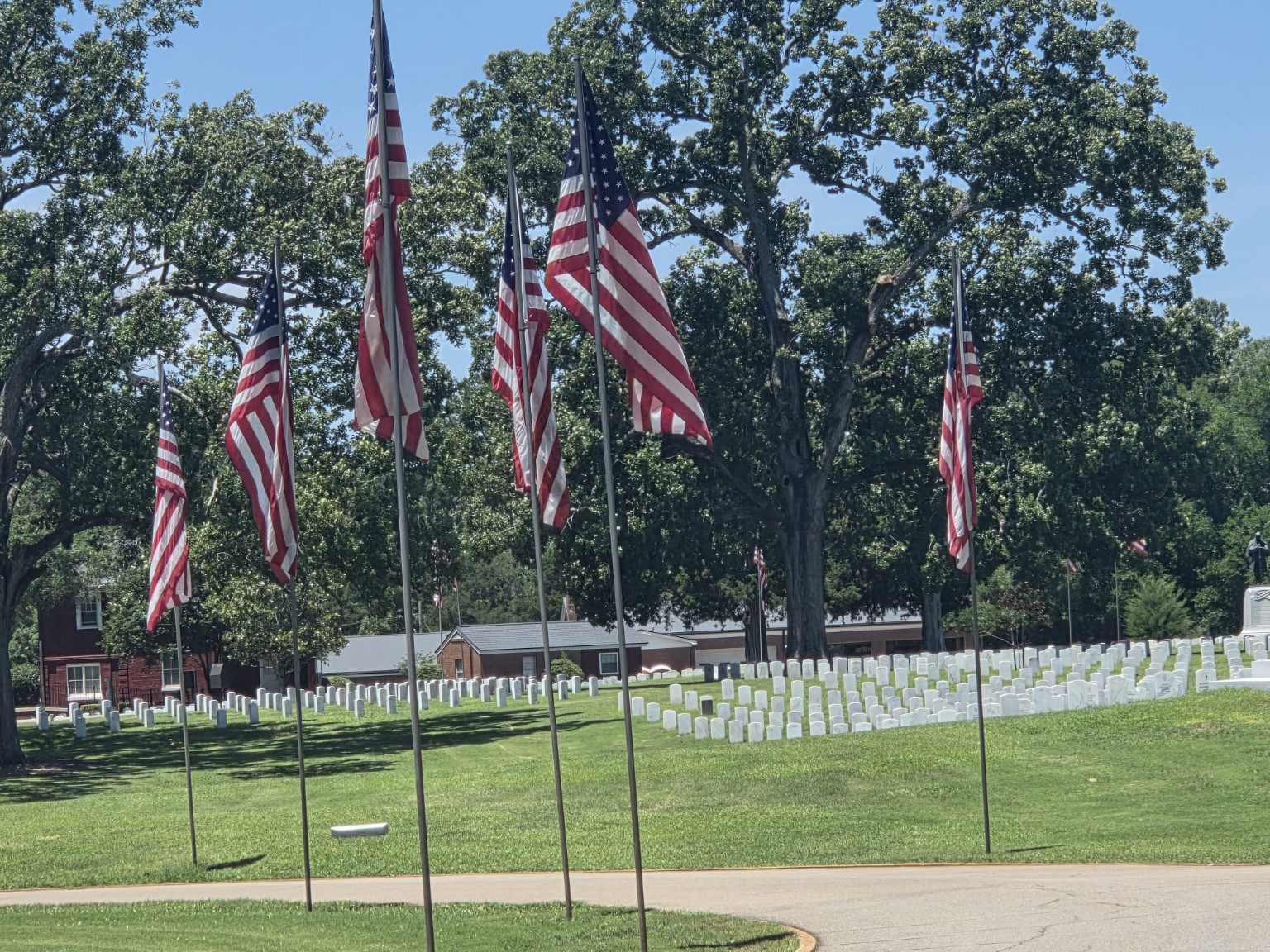
Andersonville National Cemetery, Georgia.
Established as the burial ground for Union prisoners who died at Camp Sumter during the American Civil War, the cemetery remains a place of remembrance for those who served.
The obligations of humanity do not end where military authority begins.
An order was given.
We know this because we have been told.
We have been told who gave it, who transmitted it, and who carried it out.
We have been assured that the appropriate authorities were informed.
And we have been asked to understand that the matter was therefore lawful.
But an order does not establish its own lawfulness.
Nor does the authority of the person issuing it relieve us of the responsibility to examine what was done.
On November 10, 2026, Secretary of War Pete Hegseth defended a number of American military operations, maintaining that they were lawful, authorized by the commander in chief, subsequently ordered by himself, and executed by American service members.
The explanation establishes a chain of command.
It does not settle the legal questions.
This is not an unfamiliar distinction.
In 1945, after two world wars had demonstrated the terrible capacities of organized human violence, nations established the United Nations.
The Charter did not presume that governments would always behave wisely.
It established principles by which their conduct might be restrained.
Among these was a prohibition against the threat or use of force in international relations, subject to the Charter's recognized provisions concerning collective security and self-defense.
The international community did not undertake this work because humanity had forgotten how to wage war.
It undertook it because humanity had become terribly proficient.
In 1946, the United Nations General Assembly affirmed that genocide was a crime under international law.
In 1948, the Convention on the Prevention and Punishment of the Crime of Genocide established obligations to prevent and punish that crime, whether committed in peace or war.
Its provisions did not exempt public officials or rulers from criminal responsibility.
And in 1998, the Rome Statute of the International Criminal Court set forth, among other things, the limits of the defense of superior orders.
Article 33 does not hold that every order is unlawful.
It does not eliminate the importance of military discipline.
It does not presume that every person who obeys an order possesses the same knowledge or responsibility.
It recognizes that obedience cannot, by itself, extinguish individual criminal responsibility.
The provision establishes conditions under which superior orders may be considered as a defense, and expressly treats orders to commit genocide or crimes against humanity as manifestly unlawful.
This is an important distinction.
A lawful command deserves obedience within the obligations of military service.
An unlawful command does not become lawful merely because it originated in a position of authority.
And the responsibility to determine which is which cannot be discharged by repeating the name of the person who gave it.
The United States is not a party to the Rome Statute. The Court's jurisdiction over any particular conduct would require a separate examination.
Yet the United States is a party to the Genocide Convention, having ratified it in 1988 with reservations and understandings.
Our obligations do not begin and end with the jurisdiction of one court.
Nor does the international legal order consist of a single treaty.
The Geneva Conventions establish protections in armed conflict.
The United Nations Charter establishes obligations governing international peace and security.
The Arms Trade Treaty, binding on its parties rather than on the United States as a non-party, places restrictions on certain transfers of weapons where the specified knowledge or risk of grave international crimes exists.
And the 2005 World Summit Outcome affirmed a responsibility to protect populations from genocide, war crimes, ethnic cleansing, and crimes against humanity, emphasizing prevention and collective action consistent with the Charter.
These instruments differ in legal force, scope, and application.
They cannot simply be collected into a list and pronounced interchangeable.
But they reveal a sustained international effort to articulate a common principle:
Human beings must not be left entirely at the mercy of those who possess the greatest capacity to harm them.
There is another distinction that must be preserved.
Not every unlawful military operation constitutes a war crime.
Not every war crime constitutes genocide.
Genocide requires particular prohibited acts and a specific intent to destroy a protected group, in whole or in part.
Such findings require evidence and proper legal examination.
We do not establish guilt by invoking the seriousness of the accusation.
Nor should we mistake the absence of a completed prosecution for proof that no wrongdoing occurred.
The obligation to examine credible evidence remains.
And the obligation to prevent certain crimes may arise before the crimes themselves have occurred.
In its 2007 judgment concerning the Genocide Convention, the International Court of Justice explained that the duty to prevent arises when a state knows, or should normally know, of a serious risk of genocide.
The duty is one of reasonable efforts, exercised within the means available and the limits of international law.
This matters.
Because prevention cannot begin only after every victim has been counted.
Because warnings are not meaningless merely because they have not yet become verdicts.
And because the purpose of prevention is not to provide future generations with an accurate description of what happened.
It is to preserve the possibility that some of it need never happen at all.
You cannot say you did not know.
Not when credible warnings have been examined and the danger established.
Not when the relevant obligations have been identified.
Not when the available means of lawful prevention have been placed before those with the authority to act.
Knowledge alone does not prove criminal responsibility.
But knowledge creates questions that cannot responsibly be dismissed.
What was known?
When was it known?
Who possessed the authority to act?
What measures were available?
What measures were attempted?
And what explanations were offered for those that were not?
These are questions worthy of institutions that take their responsibilities seriously.
They are also questions worthy of the people who serve within them.
On Veterans Day, we ought to remember that the dignity of military service does not depend upon the infallibility of political leadership.
Those who serve deserve lawful orders, honest counsel, and institutions capable of examining the consequences of decisions made in their names.
The law does not dishonor the soldier by asking whether an order was lawful.
It honors the soldier by insisting that the question matters.
And what of the international order itself?
We have not maintained it perfectly.
We have tolerated inconsistencies, failures of enforcement, and grave injustices.
We have too often permitted the strength of a government to determine whether its conduct will receive meaningful scrutiny.
But the failure to uphold a principle is not evidence that the principle was unnecessary.
It is evidence that the work of upholding it remains unfinished.
If international law becomes merely a collection of obligations observed by the weak and disregarded by the powerful, we will have abandoned one of the most important lessons of the twentieth century.
We will have returned toward a world in which military superiority is mistaken for moral authority, and victory is accepted as sufficient proof of justice.
There is no reason to believe that such a world would become more peaceful.
There is every reason to fear that it would become more dangerous.
The answer cannot be to abandon law because law has been violated.
Nor can it be to abandon institutions because institutions have failed.
It must be to insist that they perform the work for which they were established.
To investigate.
To preserve evidence.
To distinguish accusation from proof.
To prevent where prevention remains possible.
To hold authority accountable where wrongdoing has been established.
And to remember, always, that the people whose lives are affected by these decisions are not abstractions.
They are children.
They are parents.
They are people who expected to return home.
They are people who may never have known the names of those who determined their fates.
They are people whose lives possess value independent of the interests of any government.
We do not need another world war to discover that this is true.
We have already paid terribly for the knowledge.
And we have already written it down.
An order was given.
The law was already there.
The question is whether we will insist that it be heard.
Primary sources and legal references
- Charter of the United Nations
- Convention on the Prevention and Punishment of the Crime of Genocide
- Rome Statute, Article 33
- International Court of Justice, Bosnia and Herzegovina v. Serbia and Montenegro, 2007
- Arms Trade Treaty, Article 6
- 2005 World Summit Outcome, paragraphs 138–139
- White House release concerning Secretary Hegseth's remarks, November 10, 2026